




ADDMAN Precision drove 13% more utilization using DataXchange.
Industry

Products Used
Every in-cycle gain had already been found.
ADDMAN Precision runs a 38,000-square-foot aerospace facility in Wright City, Missouri, producing F-15 airframe components around the clock. Some parts require over 100 hours of machine time. Chief Engineer Jerry Halley and his team had spent years refining spindle speeds, toolpaths, and cell configurations. By the time the monitoring project started, every in-cycle gain had been found.
The problem was outside the cut. Aerospace contracts required year-over-year cost reductions, but ADDMAN had no reliable way to measure utilization or trace downtime causes. Their target was 65% utilization across the CNC floor. They were starting at 52% with no picture of where the gap was coming from.
Highlights
- Challenge: ADDMAN needed to find new savings but had no way to see where downtime was going.
- Solution: DataXchange connected every machine and gave the team a color-coded daily picture of every idle minute.
- Results: Utilization rose from 52% to 65% over two years with no new equipment purchased.
13%
increase in machine utilization over two years.
5%
immediate utilization gain from observation effect alone.
10+
years DataXchange has run on the ADDMAN floor.
Making the invisible visible across every machine.
DataXchange connected every machine on ADDMAN Precision's mixed fleet. It read utilization, part counts, downtime, and alarms from both SNK profilers and legacy equipment without new hardware. The first output was a color-coded daily report reviewed every morning by the plant manager and all five cell leads.
Yellow meant unexplained idle time, and that column proved impossible to ignore. The team then added the Real Time View on shop floor TVs and the Operator Data Interface for logging idle reasons instantly. Automated alerts fired when machines went idle too long. Spindle failure patterns emerged that no morning walkthrough would have caught.
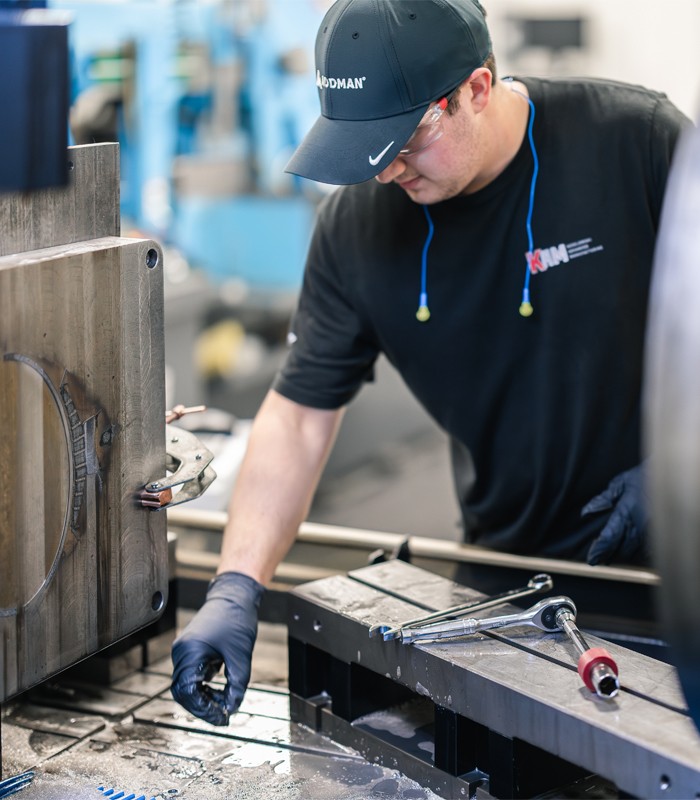
“The procedures that seem efficient and the procedures that are efficient might be two different things.”
Jerry Halley
Chief Engineer, ADDMAN Precision
13 points up. No new machines.
ADDMAN reached 65% consistent utilization after two years. The 13-point gain meant more parts per shift and lower cost per part across every job. For a floor where components require 100 or more hours of machine time each, that improvement compounded fast.
The visibility also opened commercial doors. Aerospace buyers could request a live view of machine status and job progress, and that transparency became a differentiator. DataXchange has run on the ADDMAN floor for over ten years, with the next utilization goal set at 70%.